Our views, our outlook, our language and our lives are shaped by our environment. By what we grow up around, what we hear, and what we see every day.
Social media algorithms are designed to reinforce our comfort zones and the worlds we already know.
And this is why, if I’m being completely honest, before starting at SNS there were moments where, without intending to, I expressed myself in ways that reflected the narrow ecosystem I had grown up in.
In particular, this relates to something in the week following October 7th 2023. What I said played into a trope about Muslim communities that, at the time, I didn’t even realise was a trope. And if you asked many people from my previous circles — colleagues, friends, family — they probably wouldn’t have recognised it as offensive either.
I was heartbroken. I felt like I had let down the organisation, but most importantly, my colleague Ali — someone who had shown me huge support during those difficult months after October 7th in Israel. From my own strong sense of empathy with him he is someone whom I have also been supporting through everything that unfolded in Gaza afterwards.
What followed was a very public and painful moment of accountability for me. But rather than becoming defensive, I wanted to understand why what I had said had caused hurt. Deep down, I knew I held no hatred, fear or animosity towards Muslim people or Muslim communities. Before working at SNS, I had grown up around members of Muslim communities. I live in North London, one of the most diverse parts of the country, but being totally honest, I didn’t really have close Muslim friends, and I’d never had those deeper conversations that help you properly understand the lived reality of being a British Muslim.
I very much understood what it meant to be a British Jew because that was my everyday experience. Equally, I had never had a Palestinian friend either, so I hadn’t fully connected those two worlds in my own mind — the relationship many Muslims around the world feel towards Palestine, and the emotional connection Jewish people feel towards Israel. Because of my own lived experience, it was much easier for me to instinctively understand one than the other.
Looking back now, being called out for that comment was actually one of the most important moments of my time at SNS, even though it felt deeply painful at the time.
Because it forced me to confront unconscious bias and harmful habits that I might otherwise never have addressed.
After all of this happened, I wanted to put some things right.
Through my work and relationships over the past few years, I now have close Muslim and Palestinian friends whose perspectives, experiences and stories have fundamentally shaped my understanding. Those friendships have challenged assumptions, deepened my empathy, and helped me appreciate realities that I simply could not have fully understood from the outside.
Additionally, I apologised. Nobody forced me to. Nobody guided me towards it. I wanted to do it because it was genuine, and because those were my own words.
I also felt that an apology was not sufficient.
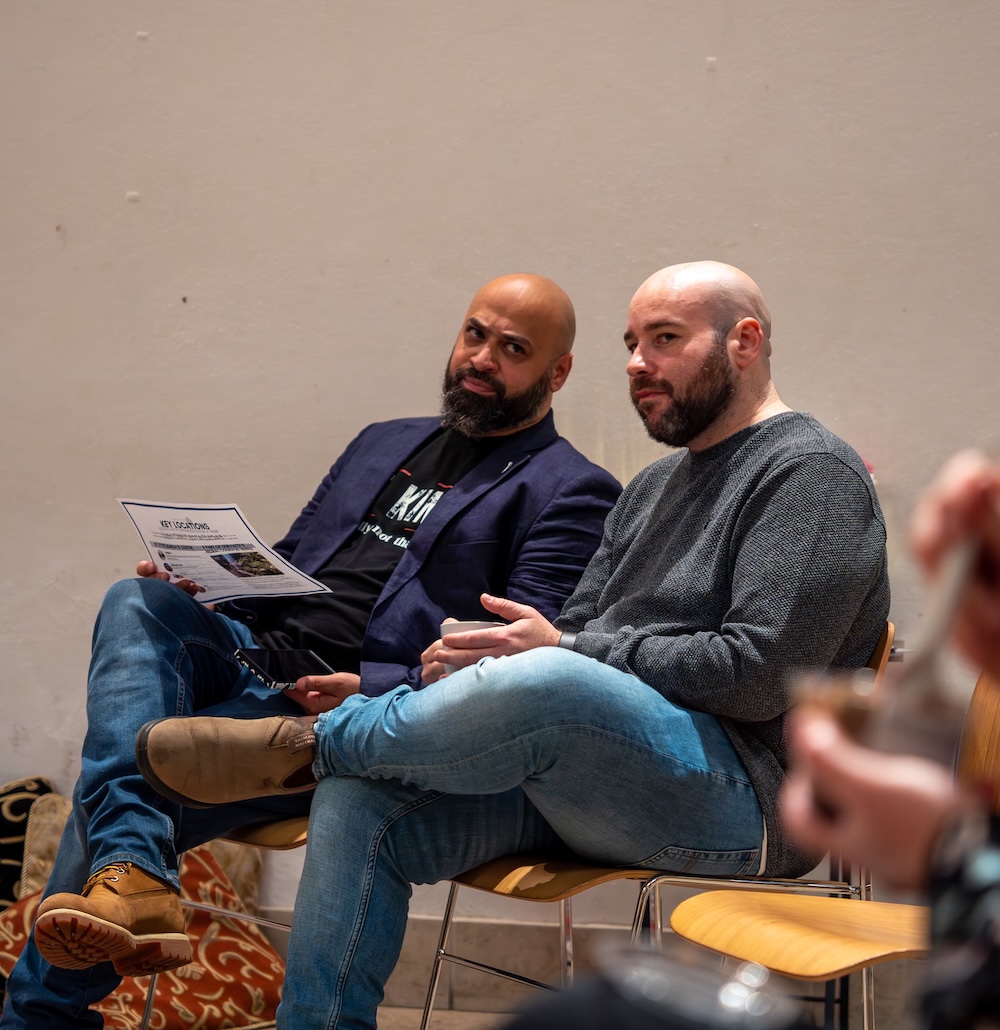
I wanted to listen. Really listen. To Ali, to young Muslim people around the country, and to members of our board. I wanted to better understand the pain, fear and day-to-day prejudice many Muslim communities experience in the UK — whether that’s abuse in the street or online, rhetoric and violence from the far right on a weekly basis, or the feeling that anti-Muslim hatred is not taken seriously enough by wider society or government.
I also wanted to educate myself properly. I started reading more deeply about the origins of anti-Muslim tropes and the language that can so easily become harmful without people even recognising it.
At the same time, I started thinking seriously about where I could make the biggest difference.
One of the places where I most commonly heard casual — and sometimes not so casual — anti-Muslim tropes was actually within my own community, the Jewish community.
And because this was the environment I came from, it felt important that I spoke honestly about it there too.
That included running sessions at major Jewish festivals and communal spaces to bring these conversations to the surface. Not to shame people, but to create honest discussions about why this language exists, why it is harmful, and why tackling it matters — not only for the moral health of our own community, but also for our wider fight against antisemitism and other forms of racism.
What I found was that it wasn’t binary.
Some of it comes from fear — genuine fear about the rise in antisemitism and the feeling that our community is under threat, which can sometimes lead people to look for someone to blame. Some of it comes from ignorance or naivety — people not understanding how certain language lands or where particular tropes come from. And yes, some of it does come from genuine prejudice towards Muslims.
My commitment, both in righting my own wrongs and in trying to support Muslim communities more broadly, is to challenge Islamophobia where I see it within my own community, while also helping create a more empathetic and understanding culture around these conversations.
Through my work at SNS, I’ve also used what I’ve learned to help deliver training — sometimes alongside Ali and sometimes independently — for teachers, charities and organisations, across the country and abroad, on recognising both antisemitism and Islamophobia, particularly in conversations connected to Israel and Palestine.
Because I know first-hand how easy it can be for rhetoric or language to slip into something harmful without somebody fully understanding the impact of what they are saying. That doesn’t excuse it. But I think it helps explain that sometimes intention is not to be hateful or harmful, and it shows the urgent need for education for large numbers of people in order to tackle Islamophobia.
So now, I try to equip people with the language, tools and awareness to communicate better rather than drive people further apart. Especially at a time when the world feels so polarised.
I genuinely believe that too many people profit from division — politically, socially and online. I don’t want to contribute to that cycle anymore.
And while I still have plenty to learn, I hope I now approach these conversations with much more empathy, humility and care. More than anything, I hope I can help other people avoid making the same mistakes I made. One of the most important lessons I have learned through SNS is that dialogue is not about always getting things right. It is about being willing to listen when you get things wrong, to understand the impact of your words, and to stay in relationship with people whose experiences may be very different from your own.
To anyone who still feels hurt or disappointed by what I said, I understand that, and I am genuinely sorry. All I can do is continue listening, learning and trying to build bridges rather than walls. If this experience taught me anything, it is that real understanding begins when we are willing to listen.