As the new academic year begins, there's a particular kind of energy that comes with September — classrooms filling up again, new faces among our Empathy Leaders, and a fresh cohort of young people ready to grapple with some of the hardest conversations they'll ever have in school. I feel that excitement every year, and this one is no different. Our team is genuinely looking forward to getting back into schools and doing the work we believe in.
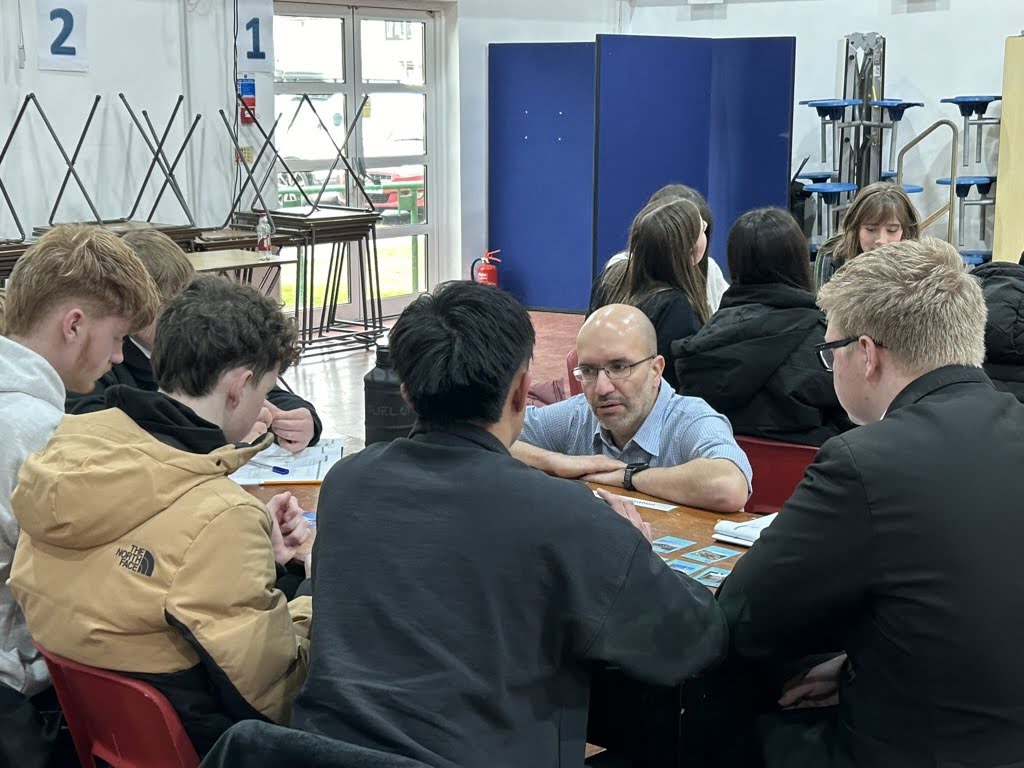
For those less familiar with what that work looks like day to day: our Empathy Leaders are pairs of peacebuilders — one Israeli, one Palestinian — who go into British secondary schools together and model something students rarely get to see modelled anywhere else: two people from "opposing sides" of a painful, generations-long conflict, sitting side by side, disagreeing openly, standing on shared values, and treating one another with total dignity throughout. It's not a debate and it's not a lecture. It's a demonstration that empathy and complexity can coexist with strong conviction. Every September, we get to introduce that idea to a new set of classrooms, and every September, it still feels like a privilege.
An Honest Word About Apprehension
But I'd be lying if I said this year begins without some apprehension too. Last year, we watched antisemitism and Islamophobia surge in ways that shook communities across the country and, at times, spilled into terrible violence that no community should have to bear. Attacks on synagogues, on mosques, on ordinary people going about ordinary days were horrendous and terrifying for the victims and their families. Many of our participants had classmates, neighbours, or family members directly affected. Some carried real fear into our sessions.
As we head back into classrooms, I find myself hoping, urgently, that this year does not bring a repeat of that hatred. I wish I could say that hope is the same as confidence. It isn't. But I can say that our work exists precisely because polarisation and dehumanisation have real, painful consequences — and this year, more than most, that mission feels essential.
We remain committed to building democratic resilience through peace education. This year, we're aiming to work with around 10,000 participants across our programmes — a target that reflects both the scale of the need and our determination to meet it. Young people are watching how the adults around them respond to hatred, and what we model for them now will shape how they respond to it for the rest of their lives.
Good News: London Schools, Free of Charge
Amid that concern, I'm genuinely delighted to share some good news — the kind of news that reminds me why we keep doing this work.
The Mayor of London has renewed his grant for our London work, which means our programme will again be free for all London schools. This is a huge vote of confidence in what our Empathy Leaders do, and practically speaking, it removes a real barrier for schools who want this education but have tight budgets. Cost has always been one of the biggest obstacles standing between a school and a programme like ours, especially for schools already stretched thin. Removing that obstacle, city-wide, means more classrooms, more students, and more of exactly the kind of dialogue London needs right now.
If you know a London school — a teacher, a governor, a parent with a foot in the door — who has been on the fence about bringing us in, now is the moment to point them our way. There is no better time, and there is no cost barrier standing in the way.
New Horizons: A Second Study Trip, This Time to Bosnia
We're also thrilled to announce a new project, made possible with funding from the Porticus Trust: a second study trip, taking our Empathy Leaders to Bosnia to explore the legacy of conflict, reconciliation, and rebuilding there.
This will run alongside our original study trip to Northern Ireland, giving participants the chance to sit with two very different post-conflict histories, and to draw their own connections between them. Northern Ireland has taught us an enormous amount about what it means to walk with our Empathy Leaders through a landscape still marked by conflict, and to help them meet people who lived through it and chose to build something better afterwards. Bosnia will offer a different history, a different geography, and a different set of lessons — but the same underlying question: how do divided communities find their way back to one another?
This is exactly the kind of experiential learning we believe changes how people think about division and peace. It's one thing to discuss conflict resolution in a classroom. It's another to stand in a place where conflict actually happened, and to hear directly from people who lived it and worked, often against the odds, to rebuild.
We're deeply grateful to the Porticus Trust for making this possible, and we can't wait to bring our Empathy Leaders to Bosnia.
Looking Ahead
None of our programmes — the work in schools, the Bosnia trip, the Northern Ireland trip, the Bridge Builders Programme, and the Future Diplomats Programme — could happen without the support of people like you. Every grant we secure, every school we reach, and every Empathy Leader we send into a classroom rests on a community of supporters who believe, as we do, that education can be one of the strongest tools we have against hatred.
As we start this school year with equal parts hope and vigilance, thank you for standing with us. There is real work ahead, and real reason for hope alongside it.