What Jewish communities are experiencing across the UK is the violation of sacred space. It is the fear of taking your children to shul, of volunteering for your community ambulance service, of simply going about your daily life as a Jew in Britain today. They are facing a persistent and escalating pattern of violence and intimidation that shows no sign of abating, and those of us who work in peace, social cohesion, and fighting against racism and discrimination must say so clearly and loudly, without equivocation.
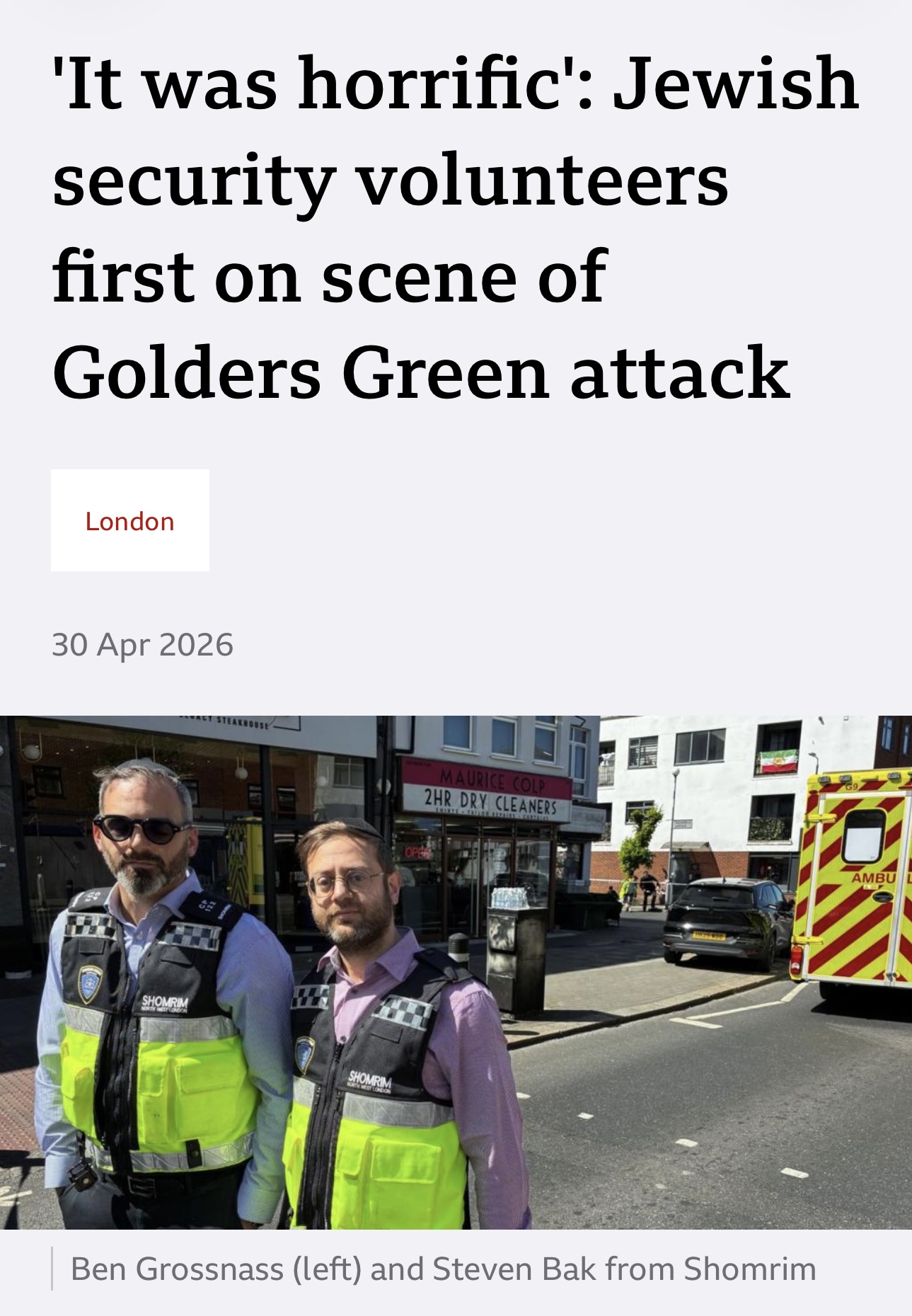
Britain is facing a deeply alarming surge in antisemitic violence. Counter-terror police are investigating a wave of arson attacks on London synagogues, including Finchley Reform Synagogue and Kenton United Synagogue in Harrow. Four Hatzola ambulances were torched in Golders Green—vehicles belonging to volunteers who save lives regardless of faith. Two Jewish community members were killed in the attack on Heaton Park Synagogue in Manchester. Now two Jewish people have been stabbed on the streets of Golders Green.
This has become an alarming and devastating pattern and it is a moment that demands we do not look away.
A Wake-Up Call to Us All
What is happening to Jewish communities is not isolated, it is part of something much darker seeping through our society.
Antisemitic incidents remain double their pre-October 2023 levels, with the CST recording an average of 308 incidents per month in 2025. But the picture is wider. Hate crime against Muslim communities is at record levels. TellMAMA recorded a record high of 6,313 incidents in 2024 which shows no sign of abating—with women particularly targeted and many people avoiding public transport out of fear. A man entered Manchester Central Mosque carrying an axe during Ramadan prayers with 2,000 worshippers inside.
Britain’s Sikh community says the climate echoes the hostility of the 1970s. A Sikh woman was followed home recently and raped by a man hurling Islamophobic abuse. The oldest Sikh temple in the UK now spends £40,000 a year on security, diverting community donations away from the people it exists to serve.
Hate does not discriminate neatly. When fear rises, it rises for everyone perceived as “other.” Whether you are lighting Shabbat candles, observing Ramadan prayers, or marching in Nagar Kirtan, you should be safe in Britain.
What We Can Do Right Now
Solidarity is important, but alone it is not enough. Action is also required—made with your time, your voice, and your behaviour.
Show up physically. Visit your local synagogue, mosque, gurdwara, or other faith space. Attend an interfaith event. Attend the rally against antisemitism at 1pm in central London on Sunday 10 May. Let those communities see unfamiliar faces standing beside them. The human connection is what makes us all stand by each other and care for one another. It is also what undoes the propaganda of hate.
Report hate crime. If you witness antisemitic, Islamophobic, anti-Sikh, or any other religiously or racially motivated abuse or attack, report it. The Community Security Trust records and responds to antisemitic incidents; the British Muslim Trust does the same for anti-Muslim hate; Rakkha supports Sikh and South Asian victims. All incidents can also be reported at www.report-it.org.uk, or by calling 999 in an emergency.
Challenge it when you see it. Hate normalises through silence. If you encounter antisemitic tropes, Islamophobia, or anti-Sikh racism — in your social media feed, at work, at school — name it. Report it. Speak up.
Support the organisations doing the work. CST, the British Muslim Trust, Rakkha, the Anne Frank Trust, Stand Up! Education Against Discrimination, and many others are working on the front line of community protection and cohesion. They need volunteers, donations, and amplification.
Talk to your children. Schools are where prejudice is seeded — and where it can be challenged most effectively. Ask your children what they know about their Jewish, Muslim, Sikh, and other classmates’ communities. Encourage curiosity and empathy, not fear.
Join your voice with others. Sign petitions, attend anti-hate marches and rallies, seek out campaigns that are countering the propaganda of hate.
Education Is Not an Add-On — It Is the Foundation
This is where SNS’s work feels urgent to me in a new way.
The government’s curriculum review is an opportunity to make this kind of education universal, not optional. Every school in England should be teaching conflict resolution, religious literacy, and the skills of dialogue across difference. Not as a one-off assembly or a token lesson, but as a sustained, serious part of what it means to be educated in Britain today.
The evidence base is there and we know what works. We know that young people, given the right tools and the right encounters, are capable of extraordinary empathy and critical thinking. We know that schools which embed these skills see real change—in how students talk to each other, how they handle disagreement, and how they respond to the kind of inflammatory content that floods their feeds every day. Peace education is not soft; it is some of the most rigorous intellectual and emotional work a young person can do.
What we lack is not evidence. It is not methodology. It is not the teachers—many of whom are already doing this work against the odds, without dedicated curriculum time or resources. The new curriculum must move beyond the question of what young people know, and take seriously the question of who they are becoming—and whether our schools are equipping them to live well together in an increasingly fractured world.
We Are All Part of This
When a Jewish person is stabbed in the street, when a synagogue burns in Harrow, when a mosque is attacked in Peacehaven, when a Sikh woman is assaulted — something is taken from all of us. The promise of pluralism. The idea that Britain is a place where you are free to be who you are. That promise is worth fighting for.