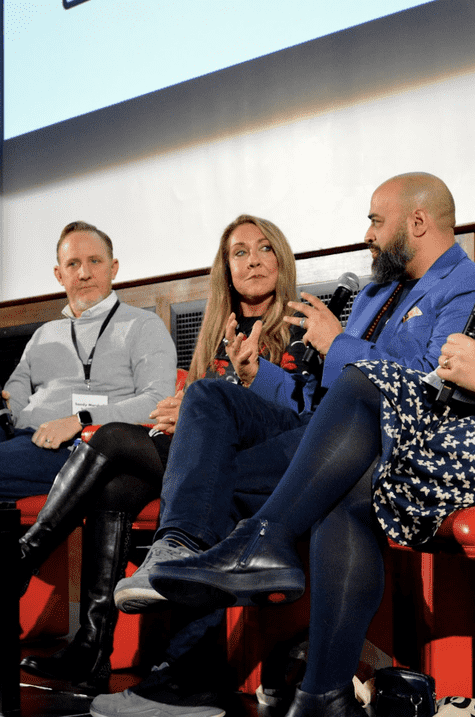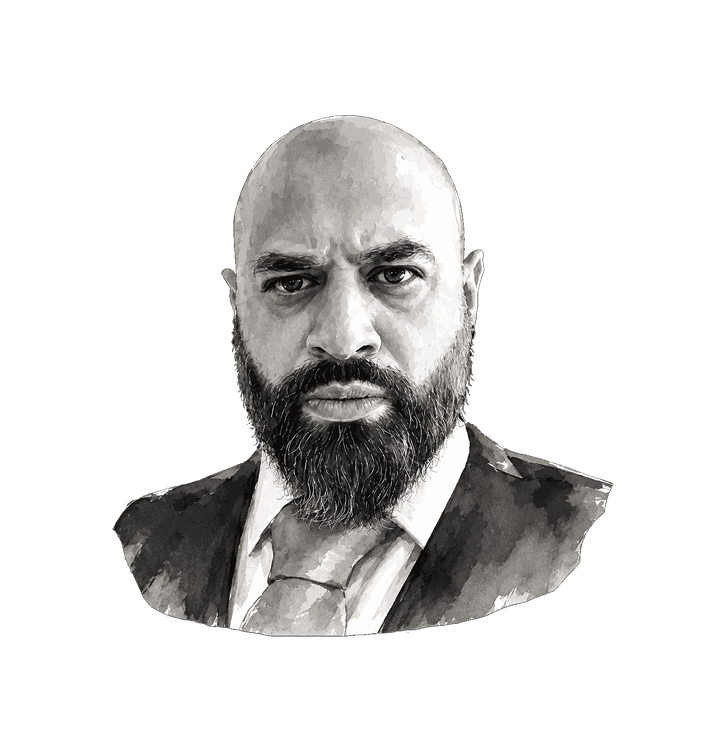
Leadership is rarely defined by certainty. It is tested in tension, in ambiguity, in moments when histories collide, narratives clash, and every voice matters. Over the past decade, my journey at SNS, from advisor and trustee through to leading on Public Affairs, the Bridge Builders Programme, interfaith dialogue, Israel-Palestine education, co-designing the Future Diplomats Programme, and training professionals has shown me that leadership is less about control and more about holding the space.
Holding the space requires courage: the courage to remain present while discomfort unfolds, to slow the room when emotions spike, and to allow dialogue to move at the pace it needs, not the pace we wish. Discomfort does not mean unsafe. In a tense interfaith dialogue where students confronted narratives of exclusion and prejudice, I learned that allowing silence, while asking reflective questions, enabled empathy to emerge where argument alone could not. Leadership is measured not by the speed of resolution but by the quality of engagement.
Muscle Memory in Moments of Crisis
True leadership is revealed in moments of crisis. In Bridge Builders workshops, conversations escalate around identity, faith, and belonging. In UNESCO sessions with ministries of education, I’ve delivered training on recognising and countering antisemitism and Islamophobia, guiding participants to navigate politically sensitive questions while maintaining trust. In classrooms on Israel-Palestine, every word carries weight; histories are alive in the room, and the space is thick with emotion.
Muscle memory matters most in these moments. Years of practice, repeated exposure to high-stakes dialogue, reflection, and deliberate intervention have taught me when to slow the conversation, when to lower the tone without silencing intensity, and when to intervene with questions that redirect rather than inflame. Leadership is trained, not accidental. In one Bridge Builders session, a heated debate between students threatened to derail the discussion. Rather than reacting immediately, I paused, encouraged participants to reflect on their assumptions, and modelled calm inquiry. By leaning on muscle memory, the room shifted from confrontation to curiosity.
Impartiality, Positionality, and Values
Leadership requires clarity of positionality. Neutrality in an educational context can be passive; it risks flattening experience and silencing voices. Impartiality is active: it demands self-awareness, courage, and moral clarity. Leaders must know where they stand, which areas are negotiable, and which are non-negotiable. My identity as a Muslim informs this clarity. It shapes my approach to interfaith work, youth leadership, and political education, guiding me to act with integrity while navigating multiple stakeholders. Knowing your values both personal and organisational is the anchor in turbulent spaces. It is what allows you to lead authentically, advocate effectively, and create dialogue that is constructive, even when uncomfortable.
Faith as Anchor
My identity as a Muslim is inseparable from leadership. Faith provides grounding in values of justice, compassion, and ihsan. It reminds me that leadership is not only about outcomes but about how they are achieved with integrity, patience, and humility. Faith shapes my approach to dialogue, decision-making, and navigating complex social, political, and interfaith terrains. It teaches that holding the space, managing tension, and modelling ethical leadership are both strategic and sacred responsibilities.
Listening, Humanisation, and the Iceberg
Conflict is rarely what it appears to be. The visible tension is only the tip of the iceberg. Beneath the surface lie history, identity, fear, and unmet needs. Leadership requires critical thinking, curiosity, and the patience to listen and understand, not just to respond.
Humanisation is central to this. In spaces where dehumanisation dominates such as polarised interfaith debates or politically charged classrooms the act of recognising the humanity of those we disagree with is both strategic and moral. In Bridge Builders sessions, listening beneath the surface revealed not just what participants said, but why they said it, allowing us to identify shared interests and co-create solutions that were truly inclusive.
Managing Many Elephants
Self-awareness is crucial, but leadership demands more: managing the “elephants” in the room, the emotional and psychological triggers of every participant. Leaders cannot eliminate these realities; they must navigate them with skill.
Emotional calibration is essential: expressing emotions consciously without escalating panic, holding tension without collapsing, and creating safety without suppressing authenticity. Asking yourself, Am I fueling panic or stabilising it? Am I expanding understanding or constraining it? is part of daily leadership practice. In the classroom, I have had to manage multiple layers of tension simultaneously, my own, the students’, and the wider political sensitivities to keep dialogue productive and relevant.
Resilience and Learning
We live in an increasingly fragile and anxious world. Leadership requires resilience: the capacity to endure, adapt, and grow under pressure. Resilience is built through failure, difficulty, and hardship. Each workshop that falters, every tense conversation, every programme that needs redesigning is an opportunity to refine judgment and reinforce discipline. Leadership is iterative: learning, reflecting, and sharpening the saw for the next challenge.
Embracing uncertainty is critical. Leadership requires courage to ask for help, humility to seek counsel, and wisdom to know when to act and when to step back. Surrounding oneself with expertise, from alumni, advisors, academics, or practitioners, is not a weakness; it is strategic. Learning to navigate the triggers of others while maintaining composure is a constant test of skill, patience, and emotional intelligence.
The SNS PEACE Model in Practice
At SNS, the PEACE model is embodied in action. Participation is authentic engagement; Equipping is providing practical skills for complex realities; Application, Creation, and Enactment are iterative cycles of learning, experimenting, reflecting and taking action. These cycles teach both young people and leaders the discipline of holding tension, thinking critically, and generating non-zero sum outcomes. Through practice, PEACE becomes more than methodology, it becomes a lived leadership pedagogy.
Holding the Space
Leadership in uncertain times is not about eliminating chaos, it is about holding the space within it. It is about stabilising the emotional landscape, creating conditions where difference can coexist, and guiding groups toward constructive outcomes. It demands resilience, muscle memory, empathy, critical thinking, and self-awareness. It demands courage: the courage to act with integrity, the courage to embrace discomfort, and the courage to expand possibilities for others.
Conclusion
The true measure of leadership emerges when tension is high, stakes are elevated, and every participant’s voice matters. Leaders who remain grounded, act decisively yet compassionately, and generate spaces for shared understanding do not merely navigate uncertainty, they transform it. Leadership is not about certainty. It is a practice: reflective, iterative, relational, and courageous. And in that practice, we shape not only outcomes, but the systems, communities, and people we serve.
Ultimately, the pillars of leadership in uncertain times are not abstract ideals but lived disciplines: muscle memory in moments of crisis, clarity of positionality, faith as an anchor, listening and humanisation, empathy, the ability to manage the elephants in the room, resilience and learning, and above all, the discipline of holding space. Together, these pillars enable leaders to remain grounded when the room feels unstable, to respond with wisdom rather than reaction, and to create conditions where trust, dignity, and constructive dialogue can still take root. Leadership, then, is not the avoidance of complexity but the capacity to inhabit it with courage, compassion, and conviction. In that practice, we do not simply navigate uncertainty; we help transform it into understanding, possibility, and shared purpose.