Every August, we look back at the academic year — the tours we ran, the training we delivered, the students who asked the brave and challenging questions, and the Palestinian and Israeli speakers who answered them with honesty and respect. This year, as ever, the numbers only tell part of the story. But they tell an important part, so here they are.
10,000 people
That's who we worked with this academic year, across classrooms, conference halls, staffrooms and parliament. It's a number I keep returning to, because behind every one of those ten thousand is a conversation that might not otherwise have happened — a Palestinian and an Israeli speaker sitting side by side in front of a class in Wales who'd never met anyone from either country before; a teacher in Manchester messaging us to say her Year 9s left the session "listening carefully to different perspectives," as one put it, "beyond headlines and stereotypes."
Here's how that number breaks down:
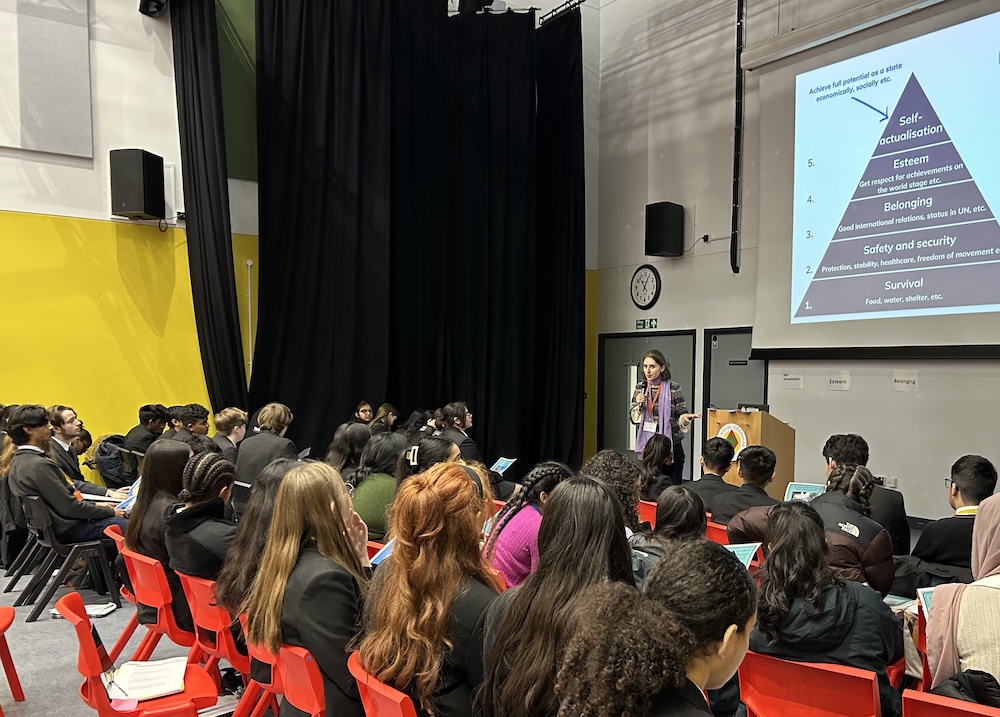
7,000 young people took part in our Youth Education Programme this year — in school halls and community centres across London, the Home Counties, West Yorkshire, the Midlands, Southwest England, South Wales, and beyond. They heard directly from paired Israeli and Palestinian Empathy Leaders, asked the questions they don't feel able to ask anywhere else, and — term after term — told us in their own words that it changed something in how they see the conflict, the media, and each other. This year that included sessions delivered against the backdrop of the US/Israel-Iran war, when tensions in some schools ran higher than usual, and our speakers stepped up regardless.
2,900 adults came through our training sessions, conferences and talks — teachers, faith leaders, diplomats, policymakers, and community partners. This strand of our work has grown faster than almost anything else we do, and I think that says something important: this isn't only a conversation for classrooms. It's one that staffrooms, town halls and Whitehall corridors need too. This year that meant everything from teacher training at Olive Branch schools to a joint Peace Education conference with the Open University, to briefings for diplomats at the FCDO.
100 young people took part in our Youth Leadership Programmes — the Bridge Builders Programme and our Student Leadership Conference. These are the participants who don't just sit with the material for an afternoon, but carry it forward — the ones who come back to us a year later having organised something in their own school or community.
None of these numbers capture everything. They don't capture the Olive Branch schools quietly building a whole-school culture around this work over several years. They don't capture the speakers who gave up evenings and weekends to keep tours running when flights were cancelled and the news made their jobs harder, not easier. And they don't capture the moment, in a room full of teenagers who arrived with despair and anger, and left with a sense of empowerment and new-found skills to make their world a better place.
But the numbers are, I think, a fair proxy for something we believe deeply: that peace and justice isn't built through slogans or through picking one side to win over the other. It's built one room at a time, one honest conversation at a time, by people willing to sit with complexity rather than run from it. Ten thousand times this year, someone did that.
Thank you to every teacher who booked a session, every speaker who told their story, every donor who made the work possible, and every young person who showed up willing to listen. Here's to the next ten thousand.