One of the teachers in our Olive Branch Community told our researcher something her headteacher had said to her: if we can't talk about it in schools, where are we going to talk about it? That question sits at the heart of everything we do. And since October 7th 2023, it has become one of the hardest questions any school leader in Britain has to answer.
So earlier this year we did something I believe every charity should do, even when it feels exposing. We asked someone independent to go and listen to our teachers, without us in the room, and tell us honestly what they heard.
What the Olive Branch Community is
The Olive Branch Community is our network for schools that want to go further than a one-off workshop. Our Youth Education Programme sessions bring an Israeli and a Palestinian Empathy Leader into the classroom together. Olive Branch is what happens in between those visits: the resources, training, networking and ongoing support that help a school keep the conversation going.
The idea is simple. Students shouldn't have to learn how to disagree well from social media. They deserve a structured, humane space at school where they can hear real human stories, test what they think they know, and practise the skills of empathy, critical thinking and dialogue. And teachers should not be expected to create and hold that space alone on such a complex and polarised topic without resources and support.
The research
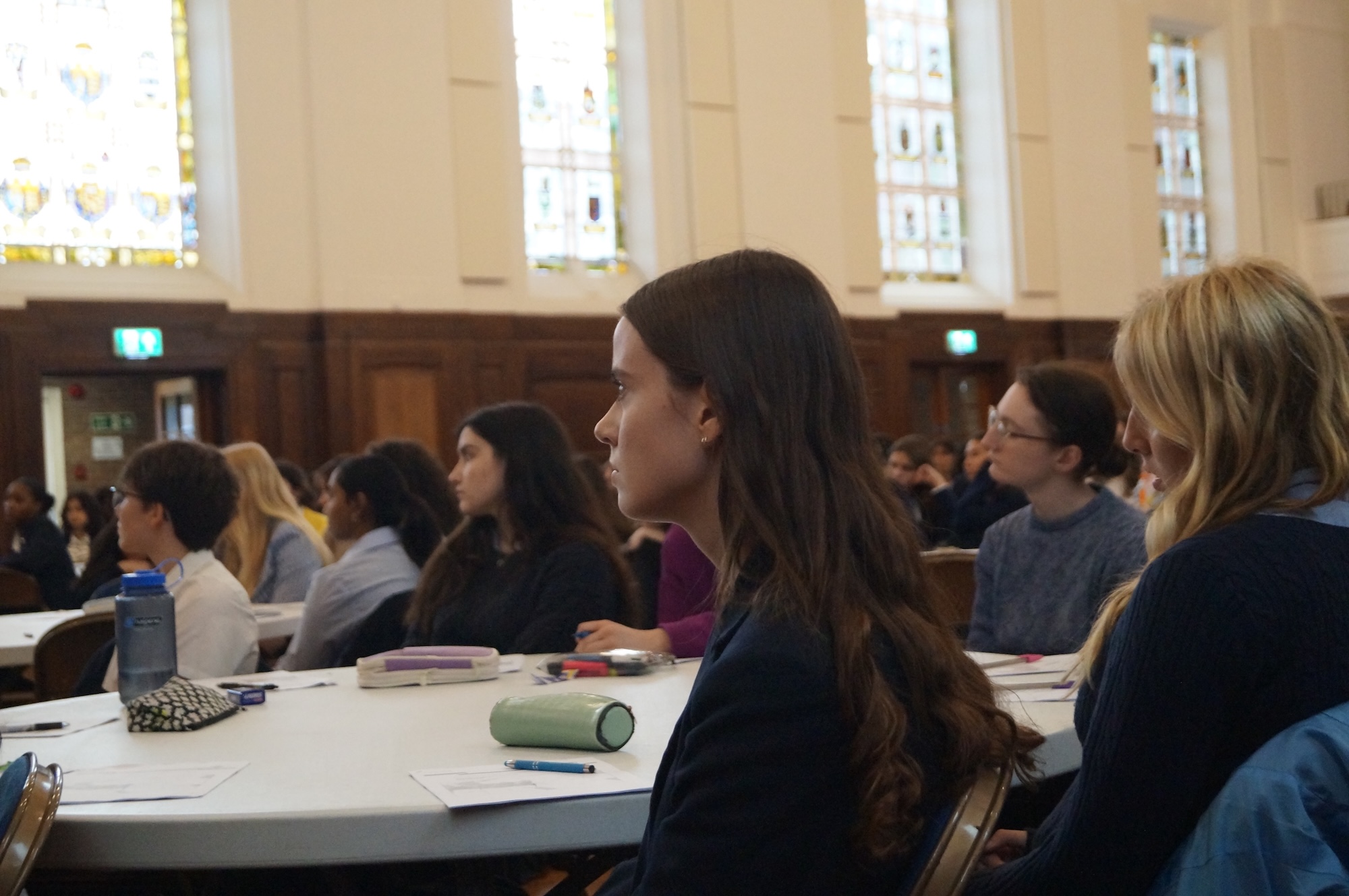
Earlier this year, Slesenger Research carried out an independent qualitative evaluation of the Olive Branch Community. The researcher spoke in depth with 12 teachers from our network of 50+ Olive Branch schools, through two two-hour online group discussions and one individual interview.
- One group was based in London and one outside London, so we could hear from very different school communities.
- The schools were varied: grammar schools, academies, Church of England and independent schools, and faith schools that share our values.
- The teachers held a range of roles: Heads of History, RE and PSHE, pastoral staff, EDI leads and a deputy head.
- They were at different stages with us, from schools in their first year to long-standing partners.
The researcher set out to ask four questions. Had being part of Olive Branch shifted the culture of these schools? Had it reduced polarisation and prejudice, including antisemitism and Islamophobia? Did staff and students feel more confident that school was a safe place to discuss Israel-Palestine? And were students better equipped to engage positively in activism?
This was a deliberately qualitative study. Twelve thoughtful teachers is not a national survey, but it gave us something numbers alone rarely do: the deeper story of what is really happening in classrooms and staffrooms.
What the researcher found
The headline finding was clear. Slesenger concluded that important and valuable work is being achieved through Olive Branch: shifting attitudes towards Israel-Palestine, decreasing tension and reducing polarisation among both staff and pupils. Where the programme is properly embedded, there is strong evidence of increased confidence among staff and pupils in discussing and debating the conflict. This means that where schools have the choice to open up this topic in their school or shut it down, they are more likely to do the former if they work with SNS.
Schools that were prepared when October 7th came
Several teachers described October 7th as a crisis point for schools. Those already working with us said they had the tools and skills to hand. One told the researcher:
"When October 7th happened, it felt like we were in a confident position. We knew how to talk about things. It didn't feel like other schools in the area, where people weren't prepared and a policy of we don't talk about it, which we all know doesn't work."
One teacher used our tutor materials to lead a whole-school assembly for 1,300 students across Key Stages 3 and 4. The report also notes that schools outside our network began reaching out to Olive Branch schools for help.
Less polarisation, more nuance
This is the finding that moved me most. A politics teacher described an A-level class that was deeply split, with one student strongly pro-Israel and most of the others strongly pro-Palestine:
"Since we had SNS it's had an impact in terms of being able to evaluate things and not always having to strongly take one side, things can be nuanced and complex."
Another said they had "seen a decline in verbal one-sided support" since bringing a more structured, human space into school. That is depolarisation in action. Not students abandoning what they care about, but learning to hold complexity.
Filling a knowledge gap
One teacher estimated that around 75% of the Year 9 and 10 students in their workshops arrive without much knowledge of the situation. Another school ran internal surveys and found students had "seen a lot but didn't know much". Many had absorbed a side from social media without being able to articulate why. Teachers valued Olive Branch for helping students move from misinformation towards evidence, and from slogans towards understanding.
Skills that travel far beyond one conflict
Teachers told us the real "light bulb" moment came when they saw this was about skills: empathy, active listening, critical thinking, dialogue. Those skills are now showing up in form time, assemblies, history clubs, RE, Politics and PSHE lessons. They help with media literacy, with how students handle personal conflicts, and even with UCAS applications.
"The moment I talked more about skills of character, empathy, dialogue, critical thinking, was when the light bulb clicked with some of the staff – we can do this in form time."
Staff growing in confidence too
It isn't only students. One teacher admitted they were "quite intimidated to begin with" when students came asking why the school wasn't taking a side. Others described colleagues attending our workshops, listening to the Palestinian and Israeli speakers, and leaving "more empowered and able to talk about it".
It's all about the people
I'll admit this section made me a little emotional. Teachers described our team as passionate, flexible, responsive, skilled and encouraging. One said simply:
"The key thing to why SNS works is the people… It's all about the people and the desire to make the world just a little bit better. You just want to keep on working with them."
To everyone in my wonderful team who invests all their expertise, adapts and shows up for these schools: this is your work being recognised.
What's getting harder
I will be honest in this blog post, because the report was. It also found real evidence of schools pulling back from discussing Israel-Palestine since October 7th and the war in Gaza.
Teachers described colleagues who no longer want to talk to students about what is happening. One school planned whole-staff training, but it was scaled back after pushback. Others have moved from working with whole year groups to smaller, voluntary groups or sixth form only. In one school, a social media post with misinformation about who our speakers were was shared hundreds of times, and parents threatened to protest.
Teachers cannot carry this alone. When a misleading post about a school session spreads hundreds of times overnight, the classroom teacher who booked it is often the one left exposed. What schools need is support that starts at the top. Headteachers and senior leaders need training and the confidence to meet parents where they are, taking their worries seriously. That means a transparent process: telling families in advance what their children will learn and why, sharing the materials and who is delivering them, and offering a clear route for questions before rumours fill the silence. Most parents simply want to know their children are safe and being taught fairly. When they are given accurate information about their children's education on these sensitive issues, many become allies rather than opponents. Social media will always move faster than the truth, but schools that communicate openly and early give the truth a head start.
The report also showed what makes the difference. Olive Branch works best where there is a passionate teacher championing it, real backing from the headteacher and senior leaders, responsibility shared among staff and student ambassadors, and a long-term commitment rather than a one-off event. As one teacher put it:
"This needs to be a whole school approach, more than one off workshops, guest speakers. And it needs to be a longer-term strategy to create a culture of this is something we talk about at school."
Where we go from here
This research confirms what I have believed for fifteen years. Education is one of the most powerful tools we have against polarisation and hate. When young people meet the human beings behind a conflict, and are given the skills to listen and think for themselves, something genuinely shifts.
It also reminds me that this work depends on brave, committed teachers. As one put it, the success in each school is down to people like them. They are the ones who keep it going between our visits, who spotlight a student's growth, who stand in front of 1,300 students and say: look at the news, it's the tip of an iceberg, and we are going to talk about it.
Our job is to make that easier for them. We'll use these findings to strengthen the support Olive Branch offers between Youth Education Programme sessions, and to help more schools build a whole-school approach that can weather difficult times.
If you are a teacher or school leader who believes your students deserve a safe space to talk about the hardest things, I would love you to join us. Find out more about the Olive Branch Community at sns.space.
Because if we can't talk about it in schools, where are we going to talk about it?